


Key considerations when designing inserts for rotomoulded products
What are the key considerations when designing inserts or multi-component assemblies in rotomoulded products, and how can these strategies improve both functionality and cost-efficiency?
Inserts and multi-component assemblies allow rotomoulded products to include threaded fittings, mounting points, reinforcement plates, handles or functional hardware. Their successful integration depends on material compatibility, accurate positioning, proper encapsulation and an understanding of post-mould finishing options. When applied correctly, these strategies enhance functionality, simplify assembly and reduce total production costs.
Material compatibility and thermal behaviour of inserts
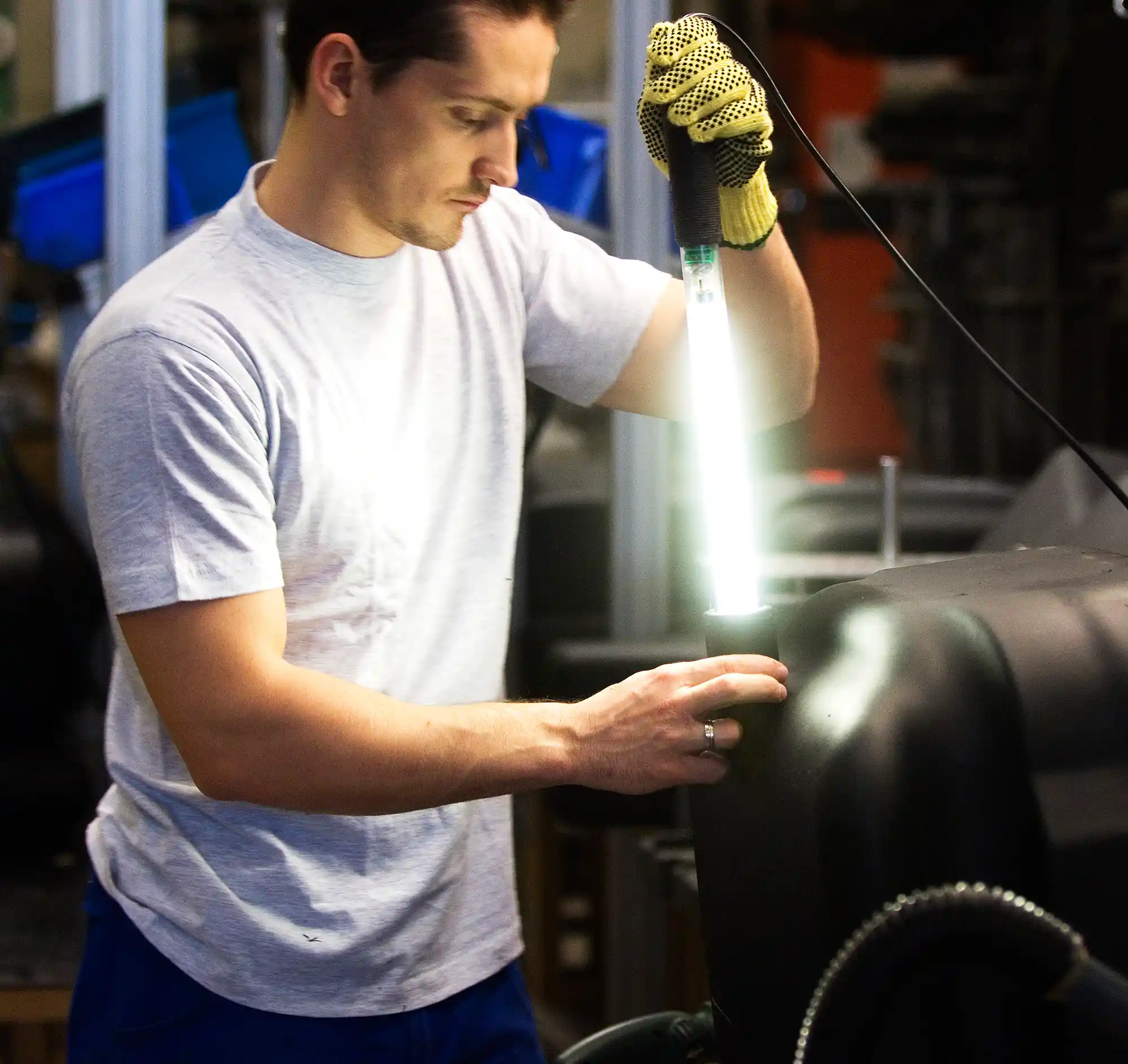
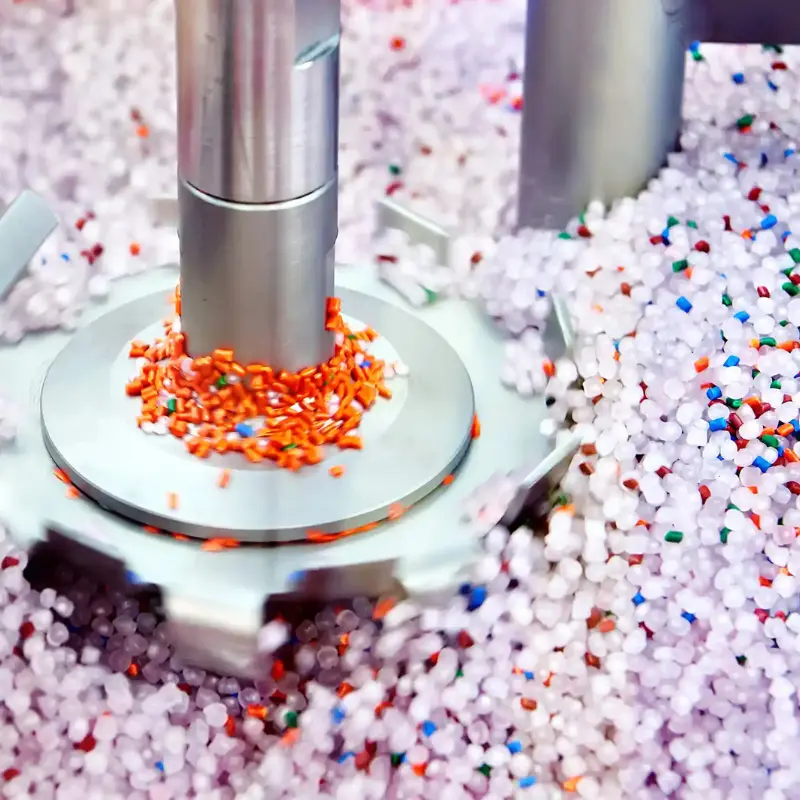
The thermal cycle of rotomoulding requires all inserts to withstand heating temperatures of around 190°C for polyethylene, making material selection essential. Metals such as brass, aluminium and stainless steel are commonly used because they maintain dimensional stability during processing and bond well with molten polymer. Designers must also consider expansion behaviour: to avoid stress points, inserts should have geometries that allow the plastic to flow and contract uniformly during cooling. Rotovia supports customers in selecting insert materials that ensure strong mechanical anchoring while maintaining long-term performance, even in demanding outdoor or load-bearing applications.
Precision placement and secure overmoulding
Correct positioning of inserts is critical because they must be placed inside the mould before the polymer powder is added. This requires precise design features such as seats, recesses or magnetic positioning aids that ensure consistent alignment. During heating, the molten polyethylene encapsulates the insert, creating a permanent, sealed bond.
To guarantee complete overmoulding, designers should ensure adequate flow pathways around the insert so the polymer can fully surround the component. Insufficient flow can lead to voids or weak points, while well-designed channels improve structural strength, provide leak-free connections and enhance the overall durability of the finished product.
Combining integrated inserts with post-mould assembly methods
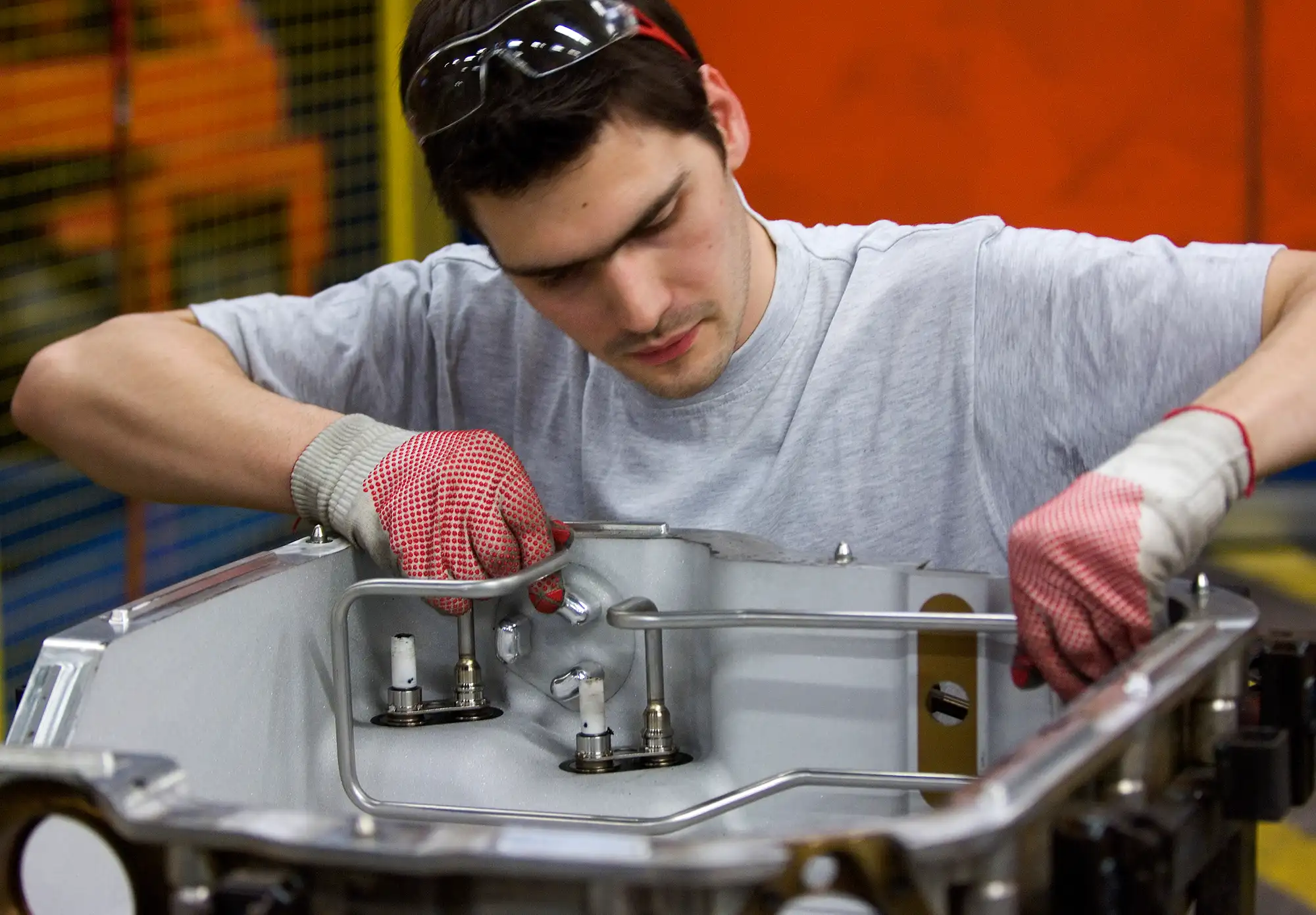
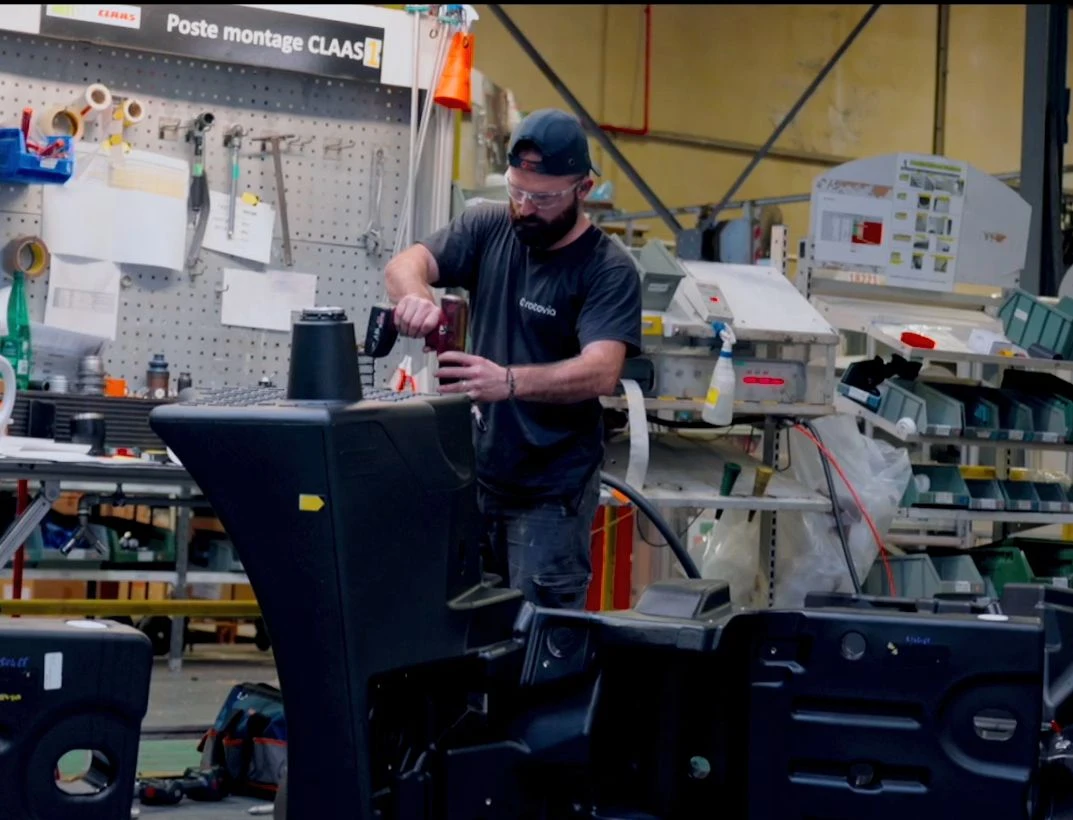
Although fully integrated inserts provide strong and streamlined functionality, some applications benefit from secondary attachment after moulding. Techniques such as CNC routing, robotic trimming, mechanical fastening and modular snap-fits allow designers to introduce additional components or create hybrid assemblies that would be challenging to mould in one cycle. This blended approach offers flexibility:
- integrated inserts reduce assembly labour and improve reliability,
- post-mould assembly enables modularity, replaceability and design iteration without altering the mould.
By balancing these strategies, Rotovia helps customers achieve optimal cost-efficiency while maintaining the desired aesthetic and functional standards.
Engineering multi-component designs for improved performance
Multi-component assemblies enable rotomoulded products to combine lightweight polyethylene structures with metal, composite or functional plastic elements. Designers can integrate double-walled areas, reinforced mounting zones or internal cavities to support inserts and distribute loads. Thoughtful geometry ensures that stresses are absorbed across the surrounding structure rather than focused around the insert itself.
This approach results in products that are durable, easy to assemble and aligned with real-world performance requirements. Whether used in renewable energy systems, agricultural equipment or recreational applications, these engineering strategies allow complex, high-value designs to be produced cost-effectively through rotomoulding.
Rotovia – your partner in advanced insert integration and custom moulding design
At Rotovia, we support customers throughout the entire development process, ensuring that insert placement, multi-component assembly and overall geometry are engineered for long-term performance and manufacturing efficiency. With decades of experience in custom moulding, our teams help optimise mould design, material selection and structural reinforcement so that each insert bonds securely and functions reliably in real-world conditions. Whether the goal is to reduce assembly time, improve load-bearing capacity or create modular, service-friendly components, Rotovia provides the technical guidance and design expertise needed to deliver high-quality rotomoulded solutions that meet demanding functional and performance standards.
Contact our team to explore how Rotovia’s custom moulding expertise can support the integration of inserts and multi-component assemblies in your project.
FAQ
How are inserts held in place during the rotomoulding process?
Inserts are positioned inside the mould before the polymer powder is added. They may be secured using dedicated pockets, magnets, recesses or lightweight fixtures that maintain their alignment throughout rotation. Properly engineered seating surfaces prevent movement and ensure that molten polyethylene flows evenly around the insert, forming a strong mechanical and chemical bond.
Which materials are suitable for inserts in rotomoulded products?
Inserts must withstand moulding temperatures of around 190°C and maintain dimensional accuracy during heating and cooling. Metals such as stainless steel, aluminium and brass are the most common choices. Their thermal stability and surface properties support reliable adhesion with molten polyethylene, ensuring long-term durability under mechanical loads, vibration or outdoor exposure.
Can rotomoulded parts include multiple inserts in one component?
Yes. Multi-insert designs are common in applications that require several attachment points, mounting plates or threaded connections. Designers must ensure each insert has enough clearance and polymer flow around it to achieve full encapsulation. Rotovia’s engineering team uses simulation and moulding expertise to evaluate placement, reduce stress concentrations and maintain consistent strength across all insert locations.
When is post-mould assembly a better choice than integrated inserts?
Post-mould assembly is beneficial in situations where components require precise tolerances that cannot be achieved through moulding alone, when modular or replaceable parts are needed, or when the overall design is too complex to be overmoulded reliably. It is also the best solution for projects that require frequent structural updates. CNC cutting, robotic trimming and mechanical fasteners provide the necessary flexibility, allowing designers to modify or upgrade assemblies without altering the mould.
How do inserts affect overall cost-efficiency?
Integrating inserts during moulding can reduce labour, simplify assembly and eliminate the need for secondary joining operations. Although integrated inserts require careful design and tooling considerations, they often lower long-term production costs. Alternatively, post-mould attachment offers flexibility and faster prototyping. Choosing the right strategy depends on product complexity, expected volume and durability requirements — areas where Rotovia supports customers through early design collaboration.
your idea
to life. Start now!
