


Dimensional consistency in rotomoulding
How predictable and consistent are the dimensional tolerances and wall thicknesses in rotomoulded parts, and what impact does this have on procurement decisions for precise assemblies?
Rotational moulding delivers excellent uniformity in wall thickness and stable repeatability for large, hollow components. However, compared to injection moulding, the process has inherent tolerance characteristics that must be considered early in design and procurement planning. Understanding how wall thickness variation and dimensional tolerances behave in rotomoulding enables more accurate specification, cost estimation and supplier evaluation, especially for assemblies requiring precise interfaces.
Wall thickness uniformity and its design implications
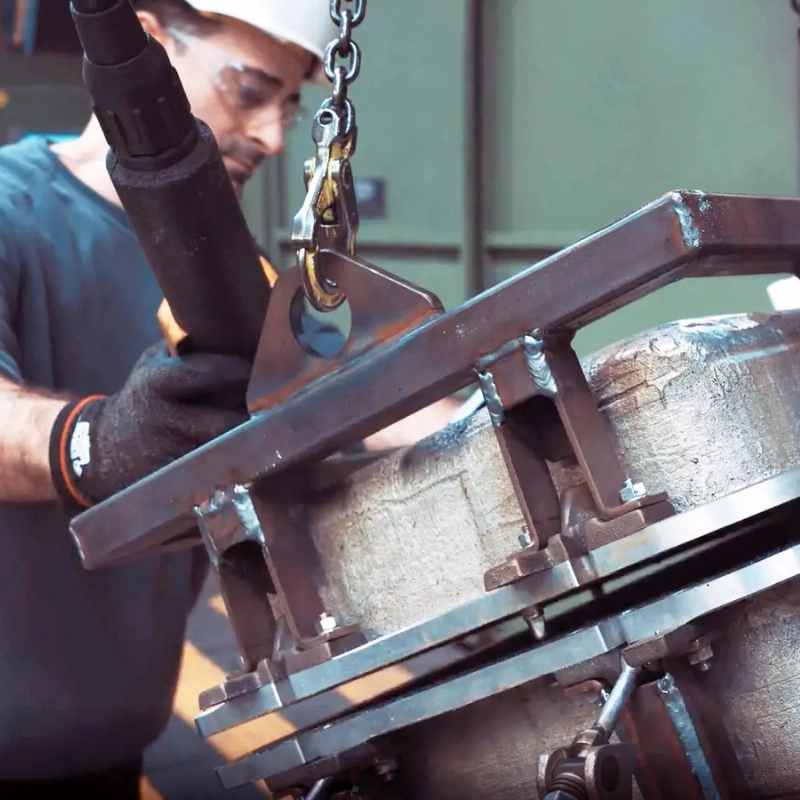
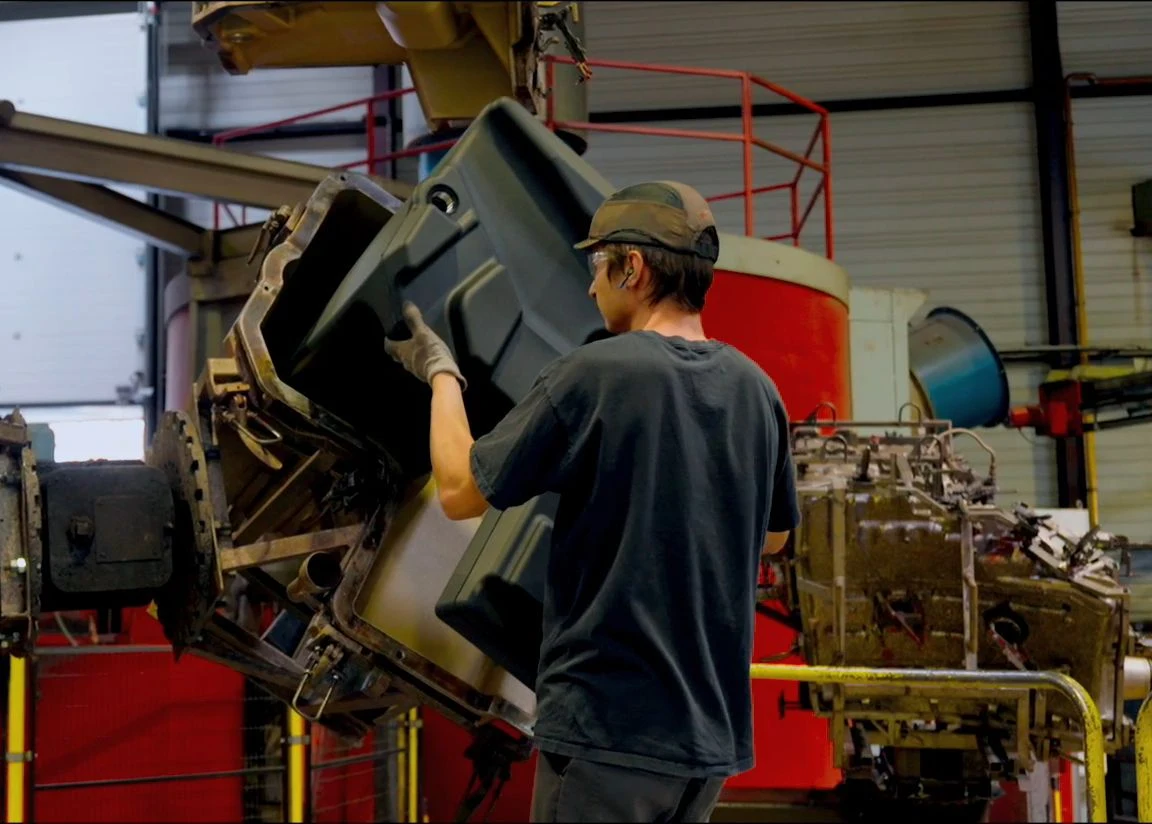
One of the key strengths of rotomoulding is the ability to produce uniform wall thickness across complex geometries. Because the polymer coats the interior of the mould evenly during rotation, large hollow parts typically achieve consistent material distribution without weld lines or weak joints.
That said, geometry plays a critical role. Sharp corners, abrupt thickness transitions or narrow sections may result in slightly thinner areas. Designers who use smooth radii, gradual transitions and balanced shapes can significantly improve thickness consistency, ensuring predictable structural performance and reliable part quality.
Dimensional tolerances and repeatability in production
Rotomoulded parts generally achieve dimensional tolerances in the range of 0.5–1%, depending on part size, geometry and cooling behaviour. While this is wider than injection moulding, it is highly predictable once process parameters – such as heating profile, rotation speed and cooling time – are stabilised.
Between production batches, rotomoulding is highly repeatable, particularly in serial manufacturing environments. Minor variations can occur due to changes in powder distribution or thermal conditions, but these are well understood and can be controlled through consistent process management and quality monitoring.
Managing precision requirements through design and finishing strategies
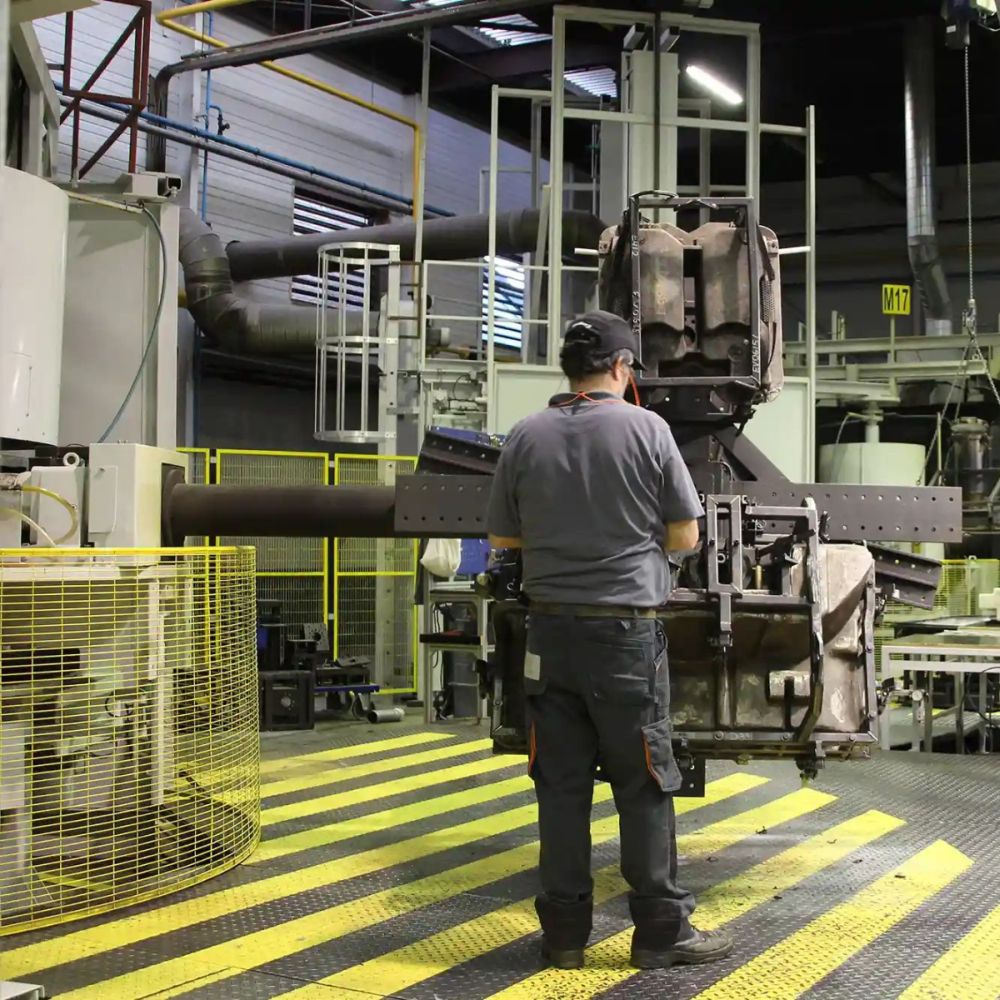
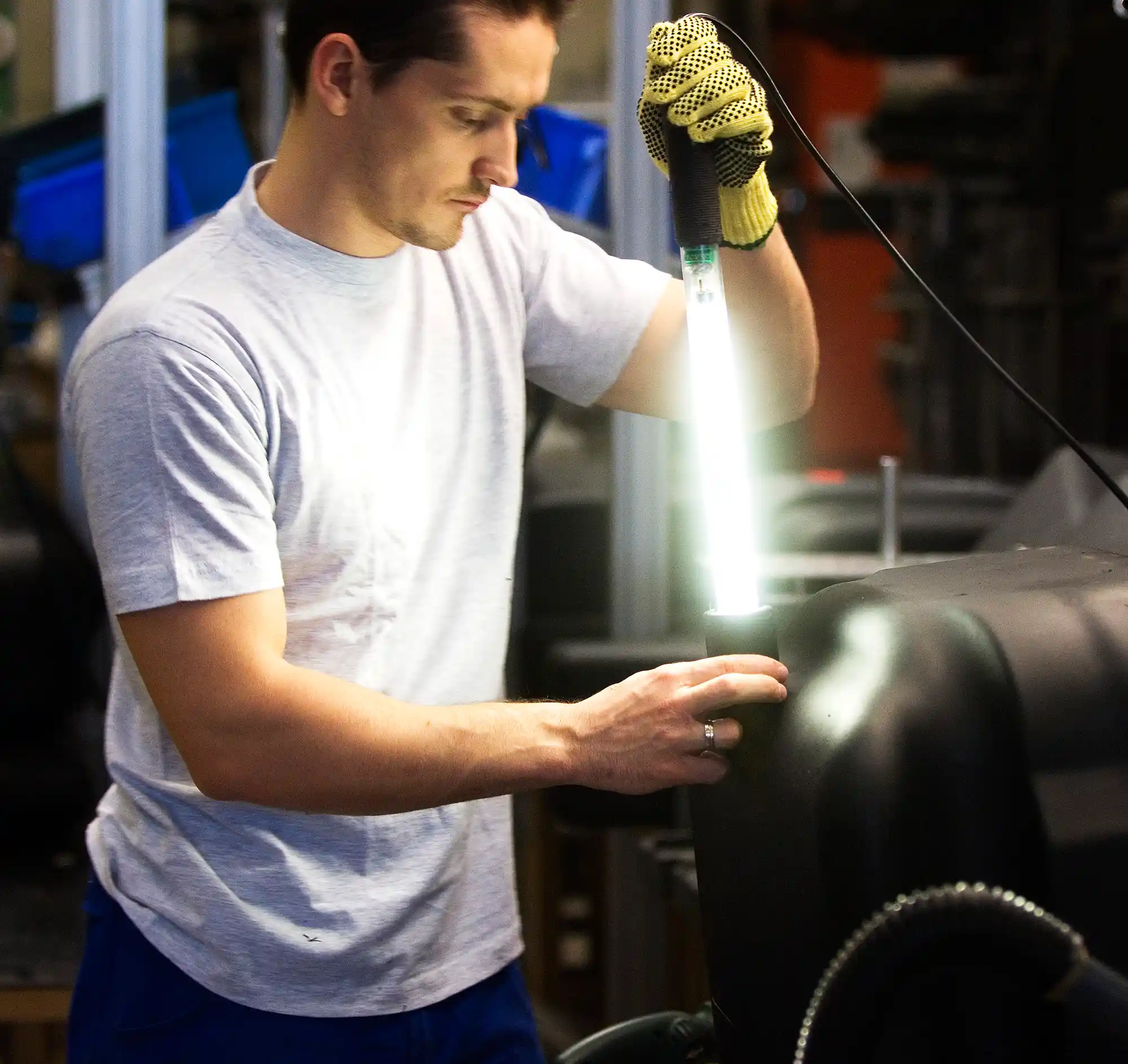
For components that must interface with other parts or assemblies, designers and procurement teams can apply targeted strategies to meet precision requirements without compromising the benefits of rotomoulding. These include:
- Post-mould finishing, such as robotic trimming or CNC machining, to achieve accurate openings or mating surfaces.
- Integrated inserts, which provide precise threaded connections or mounting points.
- Designated tolerance zones, where higher accuracy is required, while allowing standard tolerances elsewhere.
By applying precision only where it is functionally necessary, procurement teams can balance technical requirements with manufacturing efficiency and predictable costs.
Custom moulding expertise for consistent production quality
At Rotovia, we support customers throughout the custom moulding process, helping align design expectations with realistic manufacturing tolerances. Our teams combine expertise in rotomoulding design, tooling and production to ensure that wall thickness, dimensional behaviour and finishing strategies are clearly defined from the outset. This collaborative approach enables reliable planning for precise assemblies while maintaining the inherent advantages of rotomoulded components in terms of durability, consistency and manufacturability. Contact our team to discuss how Rotovia’s custom moulding expertise can support your project requirements for dimensional consistency and precision.
FAQ
How uniform is the wall thickness in rotomoulded parts?
Rotomoulded parts are characterized by very good wall thickness uniformity. Typical wall thickness variation is ±10–15%, depending on part size and geometry. In areas with sharp corners or sudden thickness changes, slightly thinner zones may occur. This is a natural characteristic of the rotomoulding process.
What dimensional tolerances are typical for rotomoulded components?
For rotomoulded parts, dimensional tolerances in the range of 0.5–1% are commonly observed. Compared to injection moulding, these tolerances are somewhat less restrictive. Higher precision may be required for certain assembly applications. In such cases, additional technological solutions after moulding are applied.
Does the rotomoulding process ensure consistency between production batches?
Rotomoulding is a highly repeatable process once the appropriate process parameters are established. Process stability depends on controlling heating, rotation speed, and powder distribution. Small variations in these parameters may cause minor deviations. These are usually slight and remain within typical tolerance ranges.
How do the tolerance limitations of rotomoulding affect procurement decisions?
For projects requiring tight tolerances, process limitations should be considered at the planning stage. For parts with threaded connections or precise mating surfaces, post-mould machining or the use of inserts is recommended. This approach helps meet technical requirements for assemblies. At the same time, it facilitates accurate cost estimation and supplier evaluation.
your idea
to life. Start now!
