


Why rotomoulding for large outdoor water tanks?
We need a large outdoor water tank that is durable, lightweight and UV-resistant. Why should we consider rotomoulding instead of methods such as injection moulding or blow moulding?
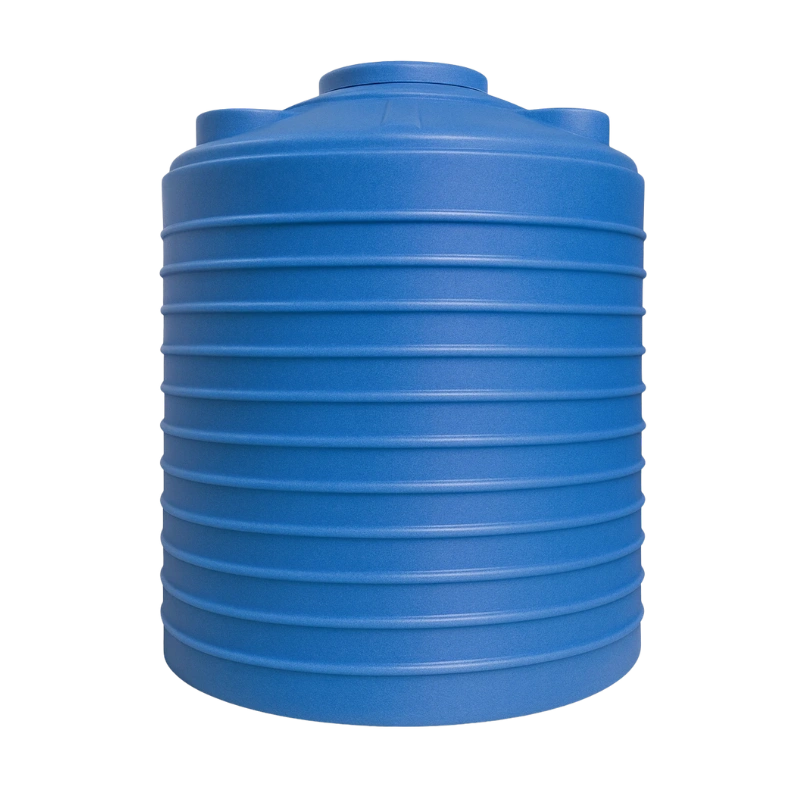
Rotomoulding technology, in which Rotovia specialises, is an excellent solution for large, hollow structures such as industrial tanks (water tanks) or other elements requiring high resistance to weather conditions.

What are the benefits of rotomoulding for large outdoor water tanks?
- Uniform, seamless construction – the tank is made in one piece, without joints or welds, which eliminates the risk of leaks and weak points.
- Uniform wall thickness – even with complex shapes, rotomoulding ensures high strength and stability of the structure.
- Resistance to UV radiation and chemicals – the UV-stabilised polyethylene used protects the tanks from cracking, fading or brittleness, even with prolonged exposure to the sun.
- Economy with large sizes – rotomoulding tools are cheaper and easier to modify than injection moulds, making the production of large tanks more cost-effective. Unlike blow moulding, which is limited in terms of wall thickness control and size, rotomoulding offers superior design flexibility and strength for very large, hollow products.
- Lightweight and durable – hollow structures are lighter, easier to transport and assemble, while maintaining high mechanical strength.
Read more about the advantages of rotomoulding for large and complex components.
Rotovia - your partner in the production of plastic water tanks
Rotovia is an international manufacturer of plastic products with production facilities in Europe and North America, supporting customers locally and globally. We work with companies across Europe, including Germany, the Netherlands, France or Poland, specialising in custom moulding, design and production of components tailored to customer requirements and needs. We support companies in industries such as agriculture, renewable energy, defence, vehicles, leisure, and construction and building by providing extremely durable, low-weight solutions that are optimised in terms of cost and functionality.
Our customized products are made from recyclable materials, which, combined with their long service life, makes them a more sustainable and environmentally friendly solution. If you are looking for large, lightweight and durable water tanks manufactured using rotomoulding, choosing Rotovia is a guarantee of quality and experience in rotational moulding technology.
Contact our team to discuss your project and discover how Rotovia’s rotomoulding expertise can support your business.

FAQ
How does rotomoulding differ from injection moulding?
Injection moulding is typically used for producing small or medium-sized parts in high volumes, where thin and precise wall sections are required. However, this process has limitations when it comes to manufacturing large, hollow products such as outdoor water tanks.
Rotomoulding, by contrast, uses a low-pressure moulding technique that enables the creation of seamless, single-piece components with uniform wall thickness and high structural integrity. It also allows for greater design flexibility and eliminates the risk of welds or weak points that can occur in multi-part assemblies. This makes rotomoulding particularly suitable for producing durable, long-lasting tanks and other large components exposed to outdoor conditions.
Are rotomoulded tanks suitable for outdoor use?
Yes, the use of UV-stabilised materials makes the products resistant to sunlight and changing weather conditions.
Why is rotomoulding better than injection moulding for the production of large products?
Rotational moulding is more economical, allows for greater design flexibility and ensures structural durability by producing components in a single piece, without joints or welds. This guarantees high durability and reliability.
How does rotomoulding differ from blow moulding?
Blow moulding is commonly used to produce smaller, thin-walled containers such as bottles, fuel tanks, or packaging products. In this process, heated plastic is inflated inside a mould to form the desired shape. While it is efficient for high-volume production of lightweight items, it offers limited control over wall thickness and is less suitable for very large or structurally demanding products.
Rotomoulding, on the other hand, distributes material evenly inside a rotating mould, resulting in uniform wall thickness and a seamless, one-piece construction. This ensures higher strength and resistance to cracking or deformation. In addition, rotomoulding allows for more complex shapes, greater design flexibility, and enhanced durability – qualities that make it particularly well-suited for large outdoor water tanks and other heavy-duty industrial applications.
your idea
to life. Start now!
