How rotomoulding supports wind energy applications
WindEnergy Hamburg 2026 brought the global wind energy industry together for four days of technology, knowledge exchange and business discussions. For Rotovia, the event was an opportunity to demonstrate how rotomoulding and custom moulding can support the development of durable plastic solutions for demanding wind energy applications – while creating opportunities to simplify products, integrate functions and prepare concepts for reliable production.
Where industry challenges meet practical solutions
Held from 22-25 September, WindEnergy Hamburg is one of the world’s leading trade fairs for the onshore and offshore wind energy industry. The event brings together manufacturers, technology providers, engineers, decision-makers and industry organisations to explore the developments shaping the future of wind energy.
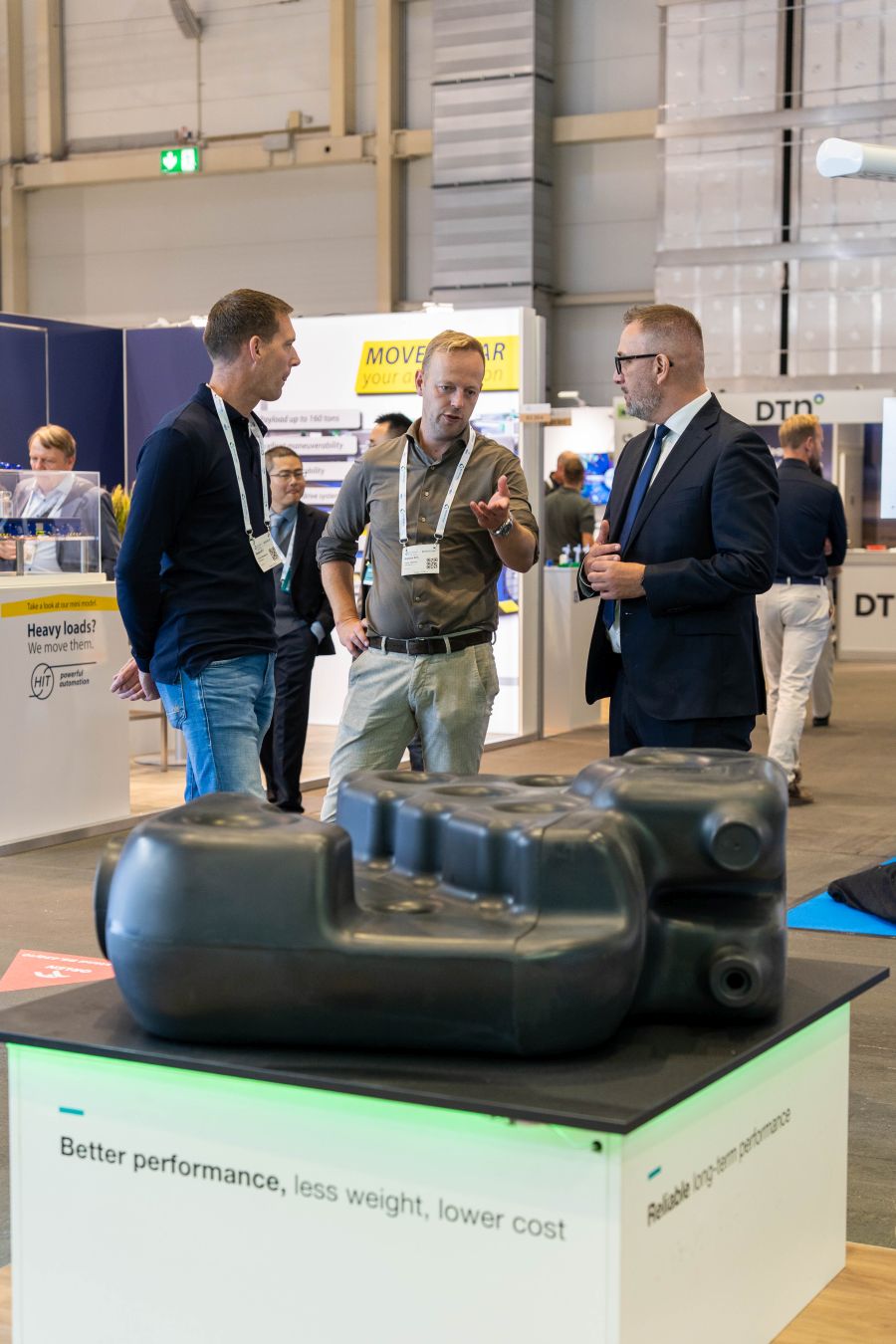
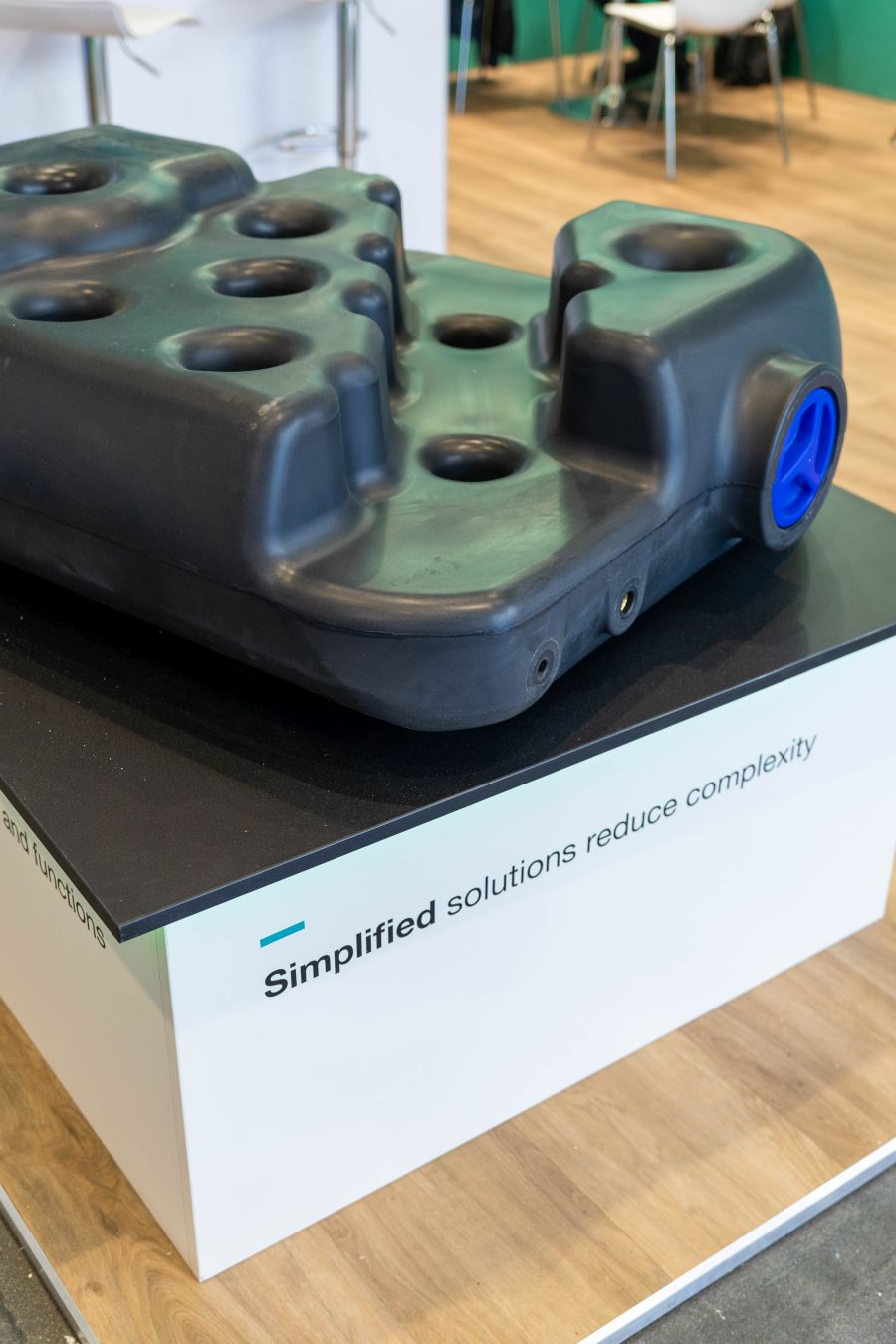
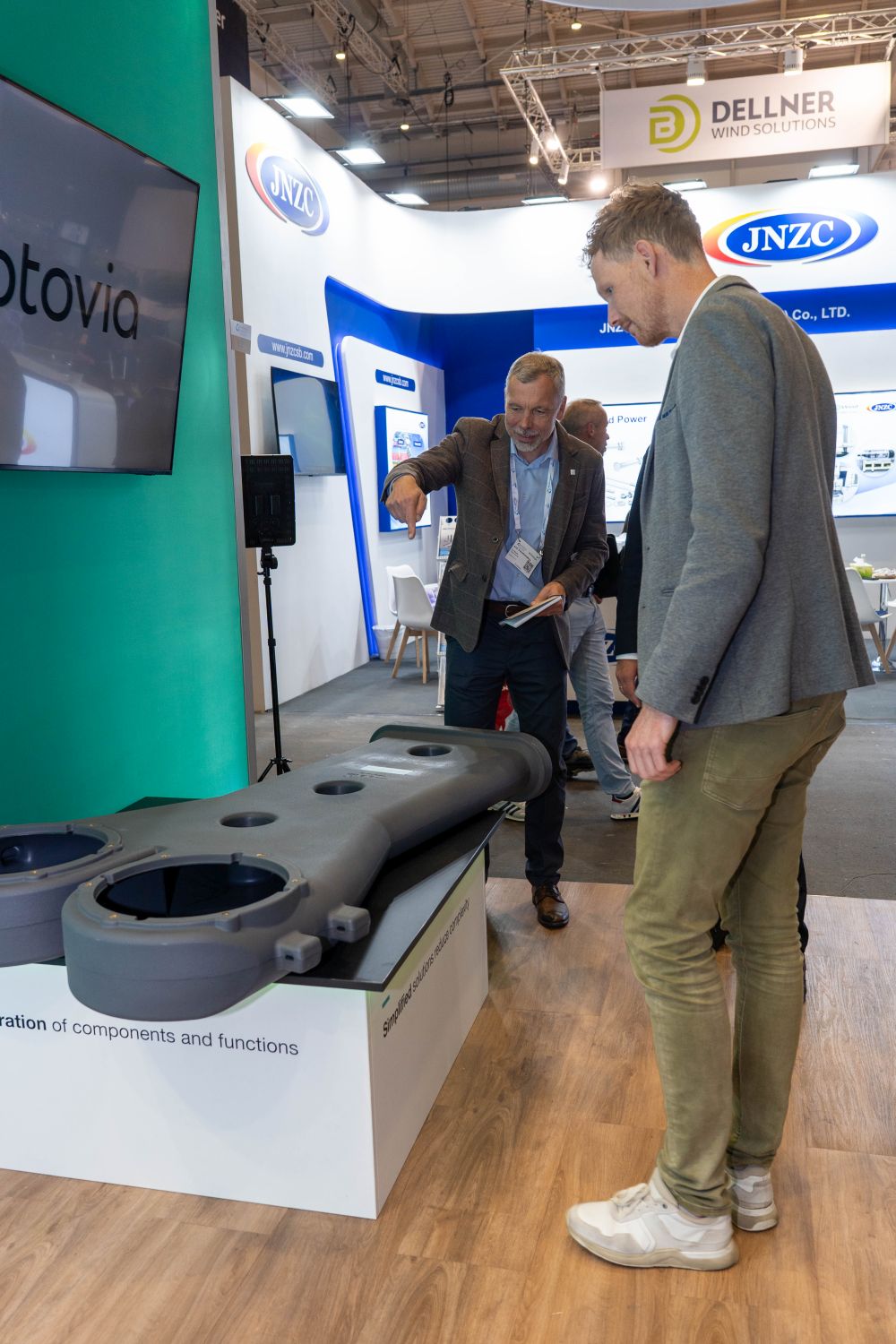
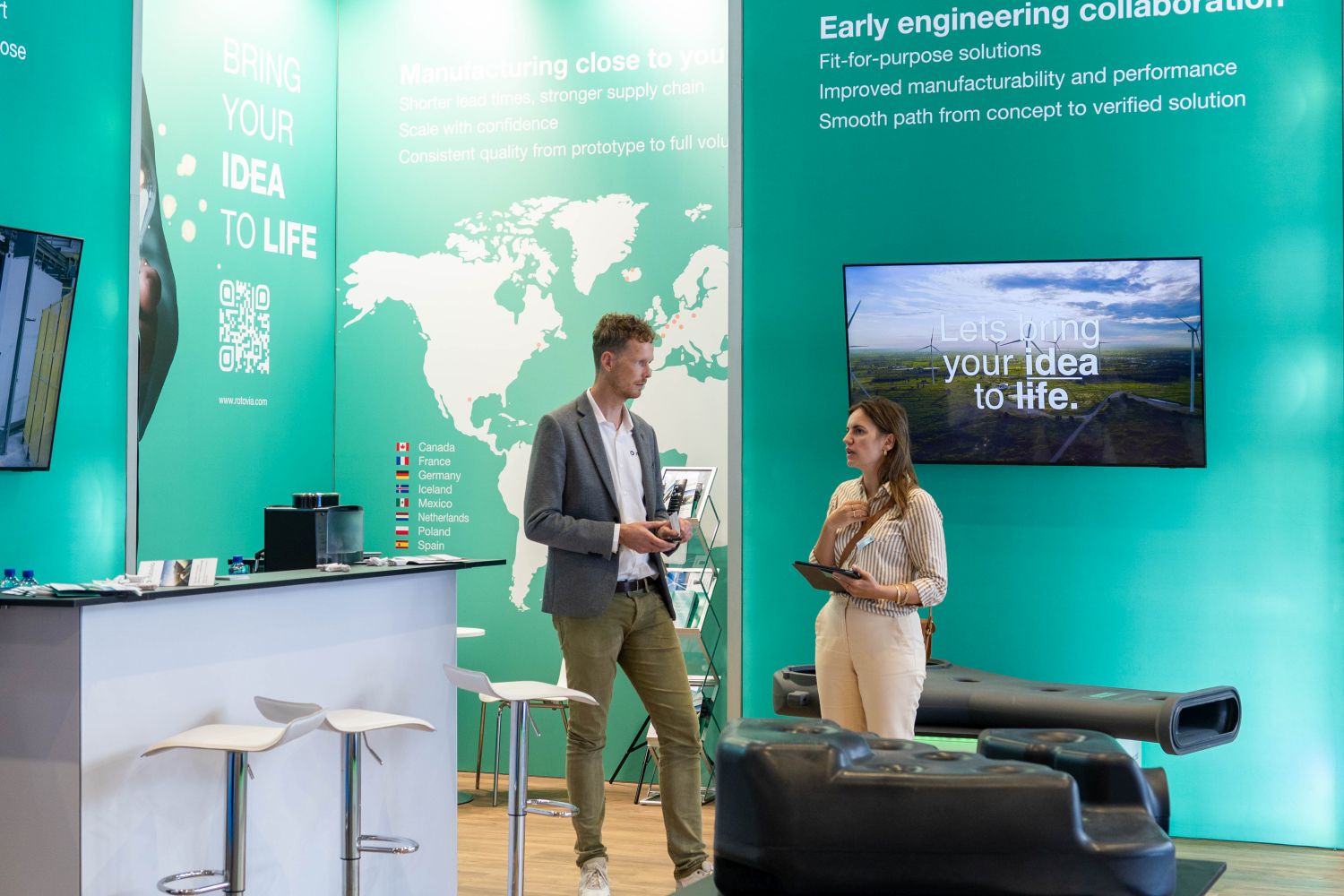
For Rotovia, being part of WindEnergy Hamburg was about more than presenting individual products. At our booth, visitors could take a closer look at a liquid coolant tank and an air duct – two examples of rotomoulded plastic solutions for wind energy applications. The products provided a practical starting point for discussions about product development, manufacturability, long-term performance and the role that rotomoulding can play in meeting specific application requirements.
Why rotomoulding is relevant for wind energy
Wind energy components often need to combine demanding technical requirements with limited installation space, durability expectations and efficient manufacturing. Rotomoulding is particularly well suited to large, hollow and geometrically complex plastic parts and can also make it possible to incorporate functional features such as ribs, mounting points or other elements into a single moulded component.
The rotomoulding process makes it possible to produce seamless, one-piece structures, creating opportunities to simplify product architecture, reduce the number of separately manufactured and assembled parts and lower assembly effort. Depending on the application and product concept, rotomoulding can also contribute to weight reduction and corrosion resistance. The value of the technology, however, comes from applying these capabilities in a way that fits the function, geometry, performance expectations and manufacturing requirements of the specific product.
Custom moulding starts with understanding the application
Every custom moulding project begins with a different set of requirements. Product dimensions, available installation space, functional demands, material selection, expected performance and production volumes can all influence the final solution. Rotovia works with customers to support the optimisation of product concepts for rotomoulding, helping to consider manufacturability and identify opportunities for functional integration before serial production begins.
For wind energy applications, manufacturability is only one part of the picture. Components also need to perform reliably in their intended environment. Depending on the project, Rotovia can support application-specific verification, testing requirements and performance validation. The coolant tank and air duct presented in Hamburg illustrated this approach from two different perspectives, showing how custom moulding can respond to different geometries, functions and application requirements within the same industry.
From product development to reliable production
A successful product concept also needs a manufacturing setup capable of supporting it over time. For wind energy companies, production capacity, flexibility and supply continuity become increasingly important as projects move from development towards serial production. Rotovia combines local manufacturing proximity with an international network of 11 production sites across Europe and North America, providing access to scalable capacity and a broad range of machine capabilities for different product sizes and technical requirements.
This combination of engineering collaboration, rotomoulding expertise, custom moulding capabilities and scalable manufacturing supports customers from product concept optimisation through to repeatable serial production. Local manufacturing proximity can support responsiveness and flexibility, while the wider Rotovia production network helps provide greater confidence in manufacturing capacity and supply over time.
Beyond technology - collaboration matters
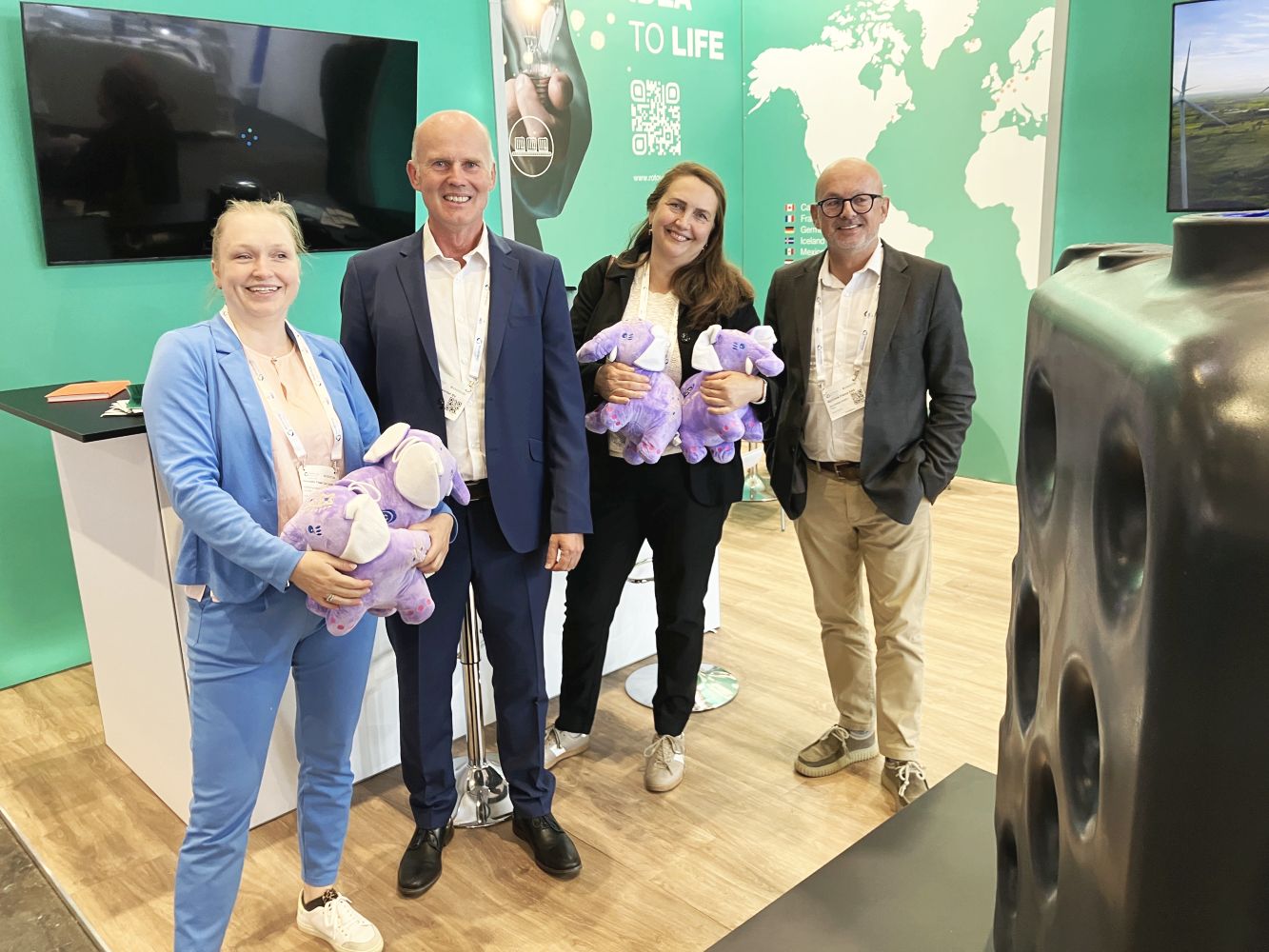
Technology is at the heart of product development, but successful projects also depend on understanding the application, exchanging experience and bringing different perspectives together. WindEnergy Hamburg gave the Rotovia team the opportunity to meet representatives from across the wind energy industry and discuss real product requirements, technical challenges and future development opportunities face to face. These exchanges are an important part of turning ideas into practical next steps.
WindEnergy Hamburg 2026 may be over, but the discussions started there continue – and for companies exploring new wind energy components or opportunities to improve an existing solution, rotomoulding offers a valuable technology to consider. Watch our video recap to see more highlights from Rotovia’s presence at the event.
Have a product challenge or an idea for a wind energy application? Contact our specialists to explore how rotomoulding could support your project.